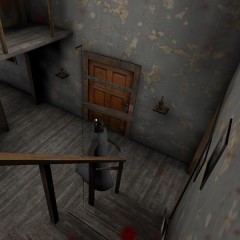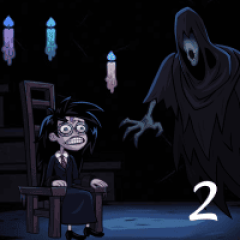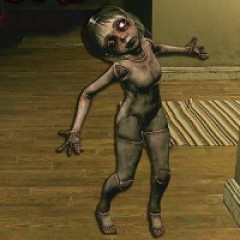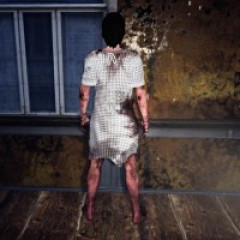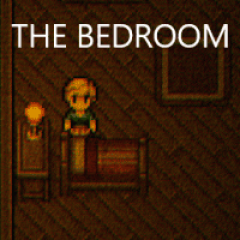
Baba Yaga is an epic puzzle game with a witch theme. Search her treehouse for hidden items, solve puzzles, make an owl potion, and escape the evil witch.
The story begins with a frightening situation: the old witch Baba Yaga kidnaps a man and locks him inside her unusual treehouse. With no obvious way out, he must investigate the rooms and find a solution before he can regain his freedom. You take control of the character and explore the witch's home, searching for clues that might reveal how to escape. The setting creates a sense of unease, as the treehouse belongs to a dangerous witch whose intentions remain mysterious. Every room offers another opportunity to discover something useful, whether it is a hidden object or an ingredient for a magical recipe. The main objective is not to defeat Baba Yaga through direct confrontation. Instead, you must use the environment to your advantage. Finding the right objects and understanding their potential uses are essential parts of the adventure.
Your primary goal is to escape Baba Yaga's treehouse. To accomplish this, you must search the environment for useful items, identify clues, and work toward preparing a potion that transforms the witch into an owl. The adventure follows a simple but engaging principle: you cannot escape until you understand what the environment has to offer. Keep these priorities in mind as you explore:
Patience is important. Rushing through the rooms without examining your surroundings could cause you to miss something that becomes essential later.
Your mouse is the primary tool for interacting with the witch's home. Move the cursor around the visible environment and click on objects that look unusual or potentially useful. When exploring a room, avoid focusing only on the largest objects. Small details can be just as important in a point-and-click adventure, particularly when the solution depends on collecting several different ingredients. A systematic search can help you avoid unnecessary backtracking:
This method helps you build a clearer picture of the environment without relying entirely on guesswork.
The witch's treehouse is filled with unusual items, but not every object necessarily serves the same purpose. Some discoveries may be ingredients, while others could help you understand the puzzles or progress toward your escape. When you encounter something unfamiliar, consider whether it resembles an ingredient, a tool, or an object that could be combined with another discovery. Do not assume that an item is useless simply because its function is not immediately obvious. Escape games often encourage you to collect objects before discovering where they belong.
At the same time, avoid assuming that every object has a confirmed function. The most reliable approach is to test possible interactions within the game and use the clues you find to guide your decisions.
The potion is the key objective described for the Baba Yaga game. Your task is to discover the required ingredients and prepare the mixture that changes Baba Yaga into an owl. The transformation creates the opportunity for your escape. However, the exact brewing steps and the precise way the game handles the witch after the transformation should be confirmed through the actual gameplay. Focus on the clues and objects available to you, and use them to determine how the final puzzle works.
Once you have solved the potion puzzle, follow the game's resulting sequence and look for the opportunity to leave the treehouse. Do not stop paying attention after completing the main ingredient search. Check the surrounding environment for the next interaction and make sure you have followed through on the escape objective. The entire adventure builds toward this moment, making the earlier exploration and item collection essential parts of the experience.
If you become stuck while exploring the treehouse, a few simple habits can make the experience more manageable.
Random clicking may occasionally reveal an interaction, but it is not a reliable way to solve every puzzle. Examine the room carefully and work through visible objects in a consistent order. This approach makes it easier to notice details you previously overlooked.
An object that seems useless at first might become relevant after you collect another item. If your progress stops, revisit earlier areas and test interactions that now make more sense. Revisiting a room with a specific question in mind is more productive than repeating the entire search without a plan.
The owl transformation provides a useful framework for organizing your investigation. When you find a strange object, consider whether it might relate to the potion, another puzzle, or the broader escape objective. This does not mean every item must belong in the recipe. Instead, it gives you a clear reason to investigate each discovery.
The witch's home is designed around mystery, so some objects may not have an obvious purpose. Give yourself time to examine them, look for contextual clues, and experiment with reasonable interactions. The satisfaction of a point-and-click adventure comes from discovering the solution, not simply clicking through the environment as quickly as possible.