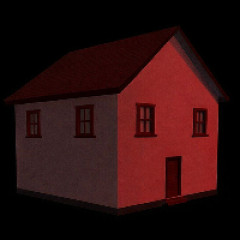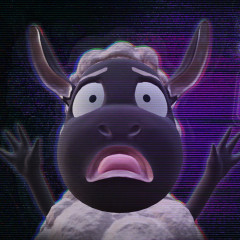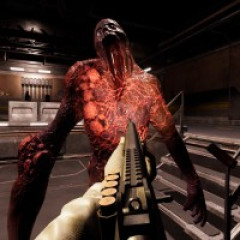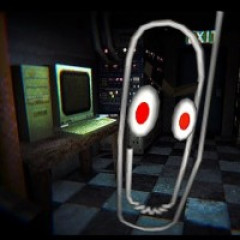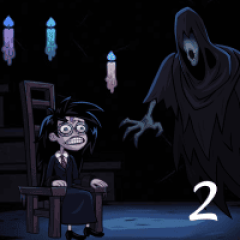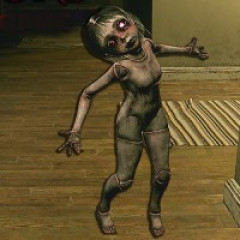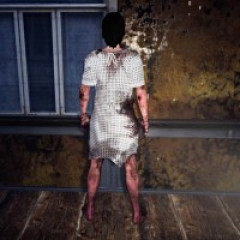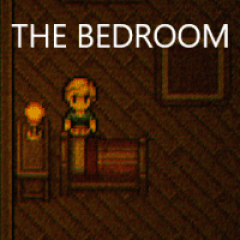
Nextdoor challenges players with mind games, hidden threats, and eerie interactions, creating a constant feeling of distrust and psychological fear.
Nextdoor is a psychological horror and deduction-based survival game where players are placed in a confined environment filled with unknown individuals. The core idea revolves around identifying who is safe and who may pose a hidden threat. Unlike traditional horror games that rely on constant chase sequences, Nextdoor builds tension through observation, decision-making, and psychological pressure.
Players take on the role of a resident or investigator inside a building where something feels deeply wrong. Neighbors behave strangely, conversations feel inconsistent, and subtle clues suggest that not everyone is human or trustworthy. The main objective is to analyze behavior patterns, inspect details, and survive long enough to avoid dangerous encounters.
The game gradually increases tension by introducing uncertainty. Every interaction becomes meaningful, and even small mistakes can lead to serious consequences. Instead of relying on fast movement or combat, Nextdoor challenges players to think carefully, remember patterns, and make the right judgment under pressure.
 Nextdoor is a suspense-driven horror game
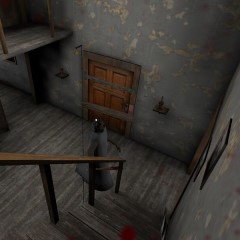
Nextdoor focuses heavily on psychological tension and observation mechanics. Players must constantly evaluate their surroundings while managing limited information. The environment is designed to feel normal at first, but subtle inconsistencies quickly reveal that something is wrong.
One of the key mechanics in Nextdoor is the observation system. Players must carefully study neighbors’ behavior, speech patterns, and movement habits. Any unusual detail may indicate a threat hiding in plain sight.
Suspicion builds over time, forcing players to make decisions based on incomplete information. Trusting the wrong character or ignoring small clues can result in failure, making attention to detail extremely important.
Instead of action-heavy gameplay, Nextdoor uses decision-based survival mechanics. Players must decide who to trust, who to avoid, and when to act. These decisions directly influence the outcome of each session. The tension comes from uncertainty. There is rarely a clear answer, and players must rely on instinct combined with observation. This creates a constant sense of paranoia throughout the game.
The control system in Nextdoor is simple and designed to keep focus on observation and decision-making rather than mechanical complexity.
Since Nextdoor is not a combat-heavy game, controls remain minimal to ensure players can focus on analyzing behavior and identifying threats.
Pay close attention to small behavioral changes in characters because subtle differences often reveal hidden threats
Nextdoor stands out because it relies on paranoia rather than action. The game creates fear through uncertainty, making players constantly question what is real and what is not. Every character interaction feels meaningful, and every detail could potentially be a clue or a trap.
The limited information system increases tension, forcing players to rely on logic and intuition. Unlike traditional horror games that use monsters or chase sequences, Nextdoor builds fear through doubt. This makes every decision feel heavy and impactful.
Sound design and environmental cues also enhance immersion. Quiet conversations, subtle background noises, and minimalistic visuals contribute to a constant feeling that something is wrong, even when nothing obvious is happening.
Nextdoor delivers a unique horror experience built on suspicion, observation, and psychological tension rather than direct confrontation. Its slow-burning gameplay keeps players engaged while constantly questioning every interaction. For fans of mystery-driven horror, the experience feels both immersive and unsettling from start to finish. After completing its challenges, players can explore more terrifying experiences across FNAF Games, where survival often depends on attention, timing, and courage in the face of the unknown.