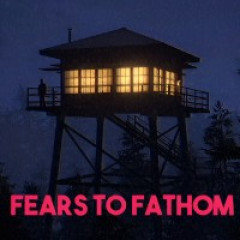
Fears to Fathom is a psychological horror game with an interesting story. You are required to explore the story, read mysterious texts, and survive the night.
In this game, each episode presents a different short story, with the events narrated by someone who survived the terrifying experience. This structure allows every episode to focus on a specific situation while maintaining the series' central emphasis on realistic fear and psychological tension. The first episode, Home Alone, takes place during the summer of 2017. You follow Miles through an evening that begins with homework, dinner, television, and a normal bedtime routine. The danger is introduced gradually, which makes the later events much more disturbing. One of the strongest aspects of Fears to Fathom is how ordinary the beginning feels. Miles wakes up around 8 PM after taking a nap and realizes that he still has chemistry homework to finish. Before studying, he decides to eat because he knows he will have trouble concentrating while hungry. Besides, don't forget to take a look at Sleep Paralysis and Last Night, which are also scary horror games on our website.
The story of Fears to Fathom is carried by a small group of characters. Each one contributes to the situation surrounding Miles, whether through direct interaction or messages sent through his phone.
Miles is the central character and the person through whom you experience the entire episode. At only 14 years old, he is unexpectedly responsible for protecting himself while his parents are away. His evening starts with simple responsibilities. He needs to eat dinner, finish his chemistry assignment, and get some sleep. The familiar routine makes his situation increasingly uncomfortable once he realizes that someone may be watching the house. When his mother warns him about the stranger, Miles has to make decisions under pressure. He cannot simply assume that everything is fine anymore. Every noise becomes significant, and even moving through his own home becomes dangerous.
Miles' mother does not appear directly in the episode, but her messages are essential to the story. She tells Miles about the lasagna in the refrigerator and later warns him about the stranger outside. Her messages also demonstrate how the game's communication system contributes to the horror. You do not receive information through long cinematic explanations. Instead, important details arrive through short texts, making the situation feel more like a real conversation. When she tells Miles to lock the doors and wait for the police, the seriousness of the situation becomes impossible to ignore.
Paula plays an important supporting role. She notices the suspicious stranger around Miles' home and sends a picture to his mother, helping the family understand that the person outside is not simply someone passing by. Later, Paula repeatedly rings the doorbell and waits outside while the police are on the way. Her presence creates another difficult decision for Miles because he knows someone is waiting downstairs, but he also suspects that an intruder may already be inside the house. The tension comes from uncertainty. Miles cannot immediately know which action is safest.
Mason Oliver is seen through messages on Miles' phone. He tells Miles that he cannot come over because he already has plans with Nat, his presumed girlfriend. He also reminds Miles about his chemistry homework. Although Mason has limited involvement in the main horror sequence, his messages reinforce how normal Miles' evening was supposed to be. A casual conversation about homework and plans contrasts sharply with what happens later.
The central idea behind Fears to Fathom is simple but effective: you are alone in a familiar house, and someone may be trying to get inside.
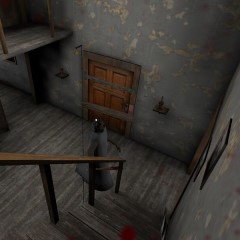
The episode does not immediately place Miles in a dangerous confrontation. Instead, the tension builds through small details. First, there is the stranger outside. Then comes the photograph from Paula. After that, Miles is told to lock the doors. Eventually, he hears a window shattering in the downstairs area. The sound changes everything. Miles realizes that the threat is no longer outside the house. Someone has entered. He hides beneath his bed and listens to what is happening around him. The house that previously felt ordinary becomes a maze of potential danger. A familiar bedroom, hallway, staircase, or window can suddenly become a place where the intruder might appear.
One of the most unsettling moments occurs when the doorbell begins ringing repeatedly. Miles' mother messages him that it is Paula and tells him to open the door so he can take shelter with her. However, Miles is already frightened and unsure whether leaving his room is safe. This uncertainty is one of the defining features of the episode. You are not simply fighting an enemy. You are trying to understand what is happening while having limited information. If Miles moves toward the stairs at the wrong moment, the intruder can emerge from the parents' bedroom. The danger becomes immediate, forcing Miles to retreat and hide again. Eventually, the intruder escapes when the police arrive, allowing Miles to leave his room and meet Paula outside.
The gameplay of Fears to Fathom focuses heavily on atmosphere, exploration, communication, and storytelling. Instead of giving you an arsenal of weapons or turning the experience into an action game, the episode keeps your attention on what is happening around you.
The game uses a photo-realistic visual style combined with a VHS-inspired presentation. This aesthetic gives the environment a dated, imperfect appearance that fits the story's unsettling tone. The VHS film aesthetic is more than a visual decoration. It helps create the feeling that you are watching or experiencing an old recording of something that actually happened. Small visual imperfections can make otherwise ordinary environments feel uncomfortable. The house, streets, bedroom, kitchen, and surrounding area become important parts of the horror because they look familiar rather than fantastical.
Another major feature is the use of text messages from NPCs. You receive messages from characters such as Miles' mother and Mason Oliver, and these conversations provide information while also making the story feel personal. Instead of stopping the action for lengthy explanations, the game allows information to arrive naturally through a phone. A simple message can completely change your understanding of the situation. When Miles' mother sends him the photograph of the stranger, the threat becomes much more concrete. When she tells him that Paula is at the door, another difficult decision appears. This approach keeps the narrative moving while maintaining the feeling that events are happening in real time.
How to control: Left-click = Choose.
The antagonist in Fears to Fathom is an unidentified intruder. His presence is frightening largely because his intentions are unclear. Earlier in the evening, Miles notices him outside the house. The stranger eventually leaves, allowing Miles to continue with his normal routine. However, the later messages reveal that the person may have been watching the property.
The breaking window is a major turning point. Until this moment, Miles can still hope that the suspicious person has simply left. Once the glass breaks, that possibility disappears. The threat has entered the house. Miles responds by hiding and listening carefully. The sound of the intruder moving through the home creates tension without requiring constant visual encounters. You know that someone dangerous is nearby, but you do not always know exactly where he is.
The episode becomes especially tense when Miles considers going downstairs after hearing Paula at the door. The danger is that the intruder is still inside. If Miles moves toward the staircase at the wrong time, the intruder can come out from the parents' bedroom and attack him before he reaches safety. Miles manages to recognize the danger and rush back to his room. He remains hidden until the intruder finally escapes after the police arrive. This sequence demonstrates how Fears to Fathom creates suspense through timing and uncertainty rather than constant combat.
If you want to get the most from the game, paying attention to small details is important. The experience depends heavily on atmosphere and information.
Do not treat phone conversations as background details. Messages from Miles' mother, Mason Oliver, and other characters provide important context. A seemingly simple message can explain what is happening or change your next decision.
The environment is part of the storytelling. Look around the house, notice what Miles can see from his windows, and pay attention to sounds coming from other rooms. The game often creates tension by making you wonder what might be happening just outside your immediate view.
The evening begins normally, but the circumstances gradually become more dangerous. Avoid assuming that an earlier event is unimportant simply because nothing immediately happens afterward. The stranger in the yard, the photograph, the warning from Miles' mother, the broken window, and the ringing doorbell all contribute to the larger situation.
Fears to Fathom offers a compelling experience. Its strongest feature is not a complicated combat system or an enormous world. Instead, it is the way ordinary circumstances slowly become threatening. You begin the night thinking about food and homework. You watch television, exchange messages with a friend, finish an assignment, and go to bed. Then a stranger appears outside your home, your mother sends you a disturbing photograph, and the sound of breaking glass confirms that the danger is much closer than you expected. The photo-realistic graphics and VHS film aesthetic strengthen the sense of authenticity, while the text-message system makes the story feel immediate. The episode also keeps the narrative focused by presenting a short survival story rather than an extended adventure. For anyone searching for a psychological horror game, episodic horror game, or realistic horror experience, Fears to Fathom is an intriguing choice. The first episode is free to play, and its straightforward premise makes it an accessible entry point into the series.