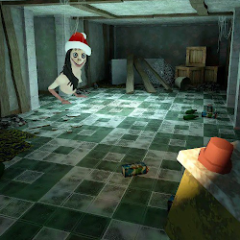
Stillwater is a supernatural horror game in which you follow an investigation into a family's troubling past. Explore the Mortimer manor and reveal the truth.
The story begins when a woman arrives carrying a mysterious letter addressed to her grandfather. Written in ominous red ink, the message contains a warning and refers to a promise made long ago. Its unsettling language suggests that something buried in the past is about to return. Private investigator Hugo Laurent takes center stage as the case begins to unfold. Working alongside his assistants, particularly Noah De Leon, Hugo must examine the available evidence and understand what is happening to the Mortimer family. The investigation eventually leads toward Henry Mortimer, the family patriarch who lives in a secluded mansion, and the strange events surrounding his apparent return to youth. The central mystery gives Stillwater its distinctive atmosphere. The case is not simply about identifying a culprit or explaining an unusual event. You must also consider the possibility that the family's history contains something far more disturbing than an ordinary crime.
The mystery in Stillwater develops around a warning that connects the present to a troubling family legacy. Nina Mortimer finds herself caught between the immediate investigation and the history that has shaped her family. Her grandfather, Henry Mortimer, becomes a central figure in the case when his unusual condition raises questions about the nature of the curse. The apparent reversal of aging is one of the story's most intriguing details. An elderly man becoming young again is not an ordinary occurrence, and the mystery invites you to consider how this phenomenon relates to the letter, the Mortimer family, and the secrets hidden within the manor. As the investigation progresses, the atmosphere becomes increasingly unsettling. The story suggests that the past has not truly disappeared. Instead, unresolved events and old promises continue to influence the lives of people who may not fully understand their origins.
The Mortimer Manor provides the setting for much of the investigation. A secluded family mansion naturally creates an atmosphere of isolation, where personal history and hidden information can become difficult to separate. As you explore the case, clickable objects outlined in white provide opportunities to investigate details that might otherwise be overlooked. These interactive elements are important because the game does not reveal everything through dialogue alone. Examining every available option during investigation sequences can help you gather a more complete understanding of the situation. It also gives you a better foundation for making later decisions, particularly when the story presents choices involving a mysterious painting or a locket. Rather than rushing through the dialogue, take time to consider what each discovery might mean. A detail that appears insignificant at first may become more relevant when viewed alongside later revelations.
The curse is more than a frightening concept used to establish the game's supernatural atmosphere. It provides the central question that connects the characters and their circumstances. Why is Henry Mortimer experiencing such an extraordinary change? What does the old promise mean? How much does the family understand about its own history? These questions encourage you to continue the investigation rather than treating each scene as an isolated event. Stillwater's narrative approach allows suspense to grow through uncertainty. You gradually encounter new information, but understanding the full situation requires you to connect details and consider alternative explanations.
Like Kiosk, this game also features many characters. The characters give the investigation its human dimension. Each person has a different relationship with the mystery, whether through professional responsibility, family connections, or personal involvement in the events at the manor.

Hugo Laurent in Stillwater
Hugo Laurent is the main investigator responsible for examining the unusual case. His role provides the perspective through which you approach the mystery. As a private investigator, Hugo must assess the information available to him, follow promising leads, and make decisions when the truth remains uncertain. His involvement also establishes a familiar detective-story structure: a puzzling situation, a collection of clues, and an investigation that gradually exposes deeper complications. Hugo's presence helps keep the story grounded even as supernatural elements enter the picture. You follow the case alongside him, evaluating discoveries and deciding which direction the investigation should take.
Noah De Leon assists Hugo throughout the investigation. As a reliable member of the team, he helps examine clues and navigate the strange circumstances surrounding the Mortimer family. His role reinforces the investigative nature of Stillwater. Solving a complicated case requires more than a single observation; it involves gathering information, discussing evidence, and making sense of details that may initially seem unrelated.
Nina Mortimer is closely connected to the events because of her family background. As Henry Mortimer's granddaughter, she faces a troubling situation that reaches into her family's past. Her involvement gives the mystery a personal dimension. The investigation is not merely an unusual case for Hugo to solve; it concerns a family whose history may have consequences for its present members.
Henry Mortimer is the family patriarch living in a secluded mansion. His apparent return to youth lies at the heart of the investigation and makes him one of the story's most significant figures. His circumstances raise questions about the relationship between the family's past and the supernatural events unfolding in the present. Understanding his situation is essential to making sense of the central mystery.
The gameplay in Stillwater is designed to support the narrative rather than compete with it. You read through scenes, investigate interactive objects, and make decisions that influence which parts of the story you experience. This structure makes the game accessible to newcomers while giving attentive readers reasons to revisit important scenes. You do not need advanced gaming skills to begin, but you do need to pay attention to the available information.
During investigation sequences, interactive objects outlined in white indicate details you can examine. Checking every available option is a useful strategy because it helps you avoid overlooking information. A thorough investigation can also make the decision-making process easier. When the game asks whether you should approach a painting or take a locket, understanding the surrounding context may help you decide which possibility you want to explore. If you are aiming to discover every ending, investigate all the highlighted options during both investigation sequences. Repeating this process consistently is particularly important when following a route that depends on later choices.
Stillwater contains five endings, which gives you several ways to experience the narrative. Some outcomes depend on an early decision, while others require you to follow a particular sequence of choices. One important decision is whether to accept or reject the case. Accepting it opens the main investigation routes, while rejecting it leads to a separate ending called "Pulling Strings." Other significant choices involve the painting and the locket. These decisions lead to different narrative outcomes, so it is worth considering what you want to discover before selecting an option. If you prefer to experience the mystery naturally, make your decisions based on the information you have gathered. If your goal is to see every ending, keep track of your choices so you can return to the relevant scenes and explore alternative routes.
How to control: Left-click = Choose.
Like Pinocchiogoria, this game also features many endings. The game includes several distinct outcomes, and some require specific choices or previous progress. The following guide summarizes the routes based on the provided ending instructions.
To reach "Case Closed," follow these steps:
This route provides a useful starting point for exploring the game's different outcomes. Complete it before attempting the final ending, "In the Dead of Night," because that route requires you to have finished "Case Closed" first.
For "Beyond the Painting," follow the main investigation until you reach the painting decision:
The important difference is the decision to approach the painting. This route allows you to explore an alternative outcome without changing the initial decision to accept the case.
To unlock "A Mermaid's Tale," use the following sequence:
Compared with "Case Closed," this route changes the locket decision. If you have already completed the first ending, returning to the relevant scene and selecting the alternative option is a straightforward way to explore this branch.
"Pulling Strings" is the most direct route among the five endings. Simply choose "Reject the case." Unlike the other endings, this route does not require you to complete the full investigation sequence described for the accepted-case branches. It demonstrates how a decision made at the beginning can lead to a different outcome.
The final ending, "In the Dead of Night," has an additional requirement: you must complete "Case Closed" first. After unlocking Ending 1, follow these steps:
The initial choices match the "Case Closed" route, but the extra requirement means you cannot unlock this ending simply by following those decisions on your first attempt. Complete the first ending, then return and continue along the specified route.