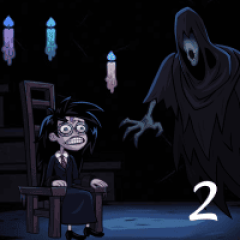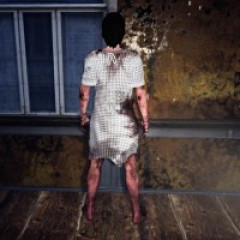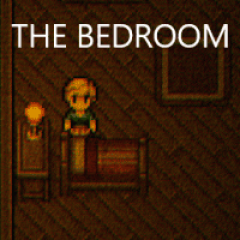
Enter the city and face its dangers in Lone Survivor. Manage hunger, exhaustion, dangerous encounters, and growing uncertainty about reality.
The gameplay in Lone Survivor brings together several systems that work toward one central objective: getting out of the city alive. You explore dangerous locations, search for useful items, manage your physical condition, and decide how to respond when threats appear.
There is no single approach that defines a successful run. You can emphasize stealth, use force when necessary, or combine both methods depending on the situation. This flexibility encourages you to think about your circumstances rather than relying on the same tactic in every encounter.
Stealth is an important part of Lone Survivor. If you prefer to avoid unnecessary danger, you can move through hostile areas without firing a single shot. Avoiding combat may help preserve resources and reduce the risks associated with direct confrontation. However, the game also allows a more aggressive approach. You can kill enemies that stand in your way instead of trying to pass them unnoticed. This creates a meaningful difference in how you handle dangerous encounters, because your preferred strategy influences your moment-to-moment decisions. Neither approach needs to define every situation. You might choose stealth when the surroundings make it practical and resort to violence when avoiding a threat is no longer a sensible option. The important point is that Lone Survivor gives you room to decide how your protagonist behaves.
Exploration is essential because the protagonist cannot survive indefinitely without food, rest, and other useful resources. The game includes hundreds of items that you can experiment with or craft, giving you reasons to investigate locations rather than rushing directly toward the exit. Its collection of more than 125 hand-painted locations also supports the exploratory side of the experience. Each area contributes to the game's distinctive visual identity and provides another part of the world to investigate. When exploring, consider your current condition before deciding how far to go. If you are hungry or exhausted, continuing without addressing those needs may make the journey harder. Likewise, entering an unfamiliar location without considering potential danger can expose you to unnecessary risks. A careful approach helps you make the most of your surroundings. Search for useful objects, consider how different items might work together, and pay attention to optional content that could reveal more about the world.
One of the defining features of Lone Survivor is its emphasis on physical and psychological survival. Your character is not an endlessly capable action hero. He is a vulnerable person struggling to function in a hostile environment, and his condition influences the experience. Food and sleep are fundamental parts of the survival simulation. The protagonist begins the adventure hungry and exhausted, so maintaining his physical condition is an important concern from the outset. You can choose to eat and sleep well, treating your character's basic needs as priorities. Alternatively, you can push forward when circumstances demand it, accepting the possibility that neglecting these needs will complicate your journey. The protagonist's psychological condition is just as important to the atmosphere as his physical vulnerability. He has begun to question how much of what he sees is real, leaving you uncertain about the relationship between the environment and his mental state.
Lone Survivor also allows you to resort to drugs to keep going rather than consistently relying on eating and sleeping well. This option reinforces the game's willingness to let you make imperfect decisions in difficult circumstances. The important distinction is that survival is not presented as a simple checklist of universally good choices. You can adopt healthier routines, or you can choose a more desperate approach when you want to push forward. The game encourages you to experience the consequences of your behavior rather than prescribing one ideal way to play. If you are interested in the psychological side of Lone Survivor, this tension between self-care and desperation is worth paying attention to. It connects the survival mechanics to the protagonist's broader struggle and reinforces the idea that escaping the city involves more than overcoming physical obstacles.
This survivor game is designed around an interactive story that changes according to your actions. Rather than separating narrative from gameplay, it encourages you to role-play and forget about the underlying systems while making decisions that feel appropriate to your character. This design gives ordinary actions additional meaning. Choosing to search for survivors suggests a willingness to seek connection, while attempting to escape alone creates a different interpretation of the protagonist's circumstances. Similarly, maintaining healthy routines or neglecting mental health helps define the kind of person you are guiding through the city.
One of the game's key features is the availability of two entirely different paths through the story, each with many variations. This structure gives you a reason to revisit the adventure and make different decisions.
A second playthrough does not need to be a repetition of your first. You can change your approach to combat, make different choices about survival, or explore the possibility of finding other people instead of attempting to leave alone.
These differences make the game particularly suitable for role-playing. You can approach the protagonist as a cautious survivor who avoids unnecessary violence, or as someone who prioritizes immediate escape regardless of the cost. You can also experiment with different attitudes toward food, sleep, and mental health.
The game's branching structure supports this variety without requiring you to follow a single prescribed personality. Your choices become part of the story you experience.
Despite its dark setting, Lone Survivor is not defined entirely by misery. Its story is described as mature and emotionally varied, with warmth, humor, and even hope existing alongside the horror.
This contrast helps the narrative feel less one-dimensional. A world devastated by disease can still contain moments that make the protagonist's journey feel personal, and the possibility of hope gives the struggle a purpose beyond mere endurance.
The game does not need to remove its frightening elements to create these moments. Instead, its emotional range allows the darker sections to exist alongside more human experiences. This makes the story appealing if you prefer horror that explores character and atmosphere rather than relying exclusively on fear.
One of Lone Survivor's most unusual features is its invisible psychologist, which watches your actions and contributes to the game's responsive design. This idea reinforces the sense that the protagonist's behavior matters beyond individual encounters.
Rather than treating your decisions as isolated gameplay inputs, the game encourages you to think about the patterns they create. How do you react to danger? Do you look after your character's needs? Do you attempt to find other survivors, or do you withdraw from the world around you?
The invisible psychologist fits naturally into a game concerned with mental health, isolation, and uncertainty. It gives additional weight to the relationship between your behavior and the story, encouraging you to remain immersed in the protagonist's experience instead of viewing every action as a mechanical optimization.
For this reason, Lone Survivor can feel different depending on the choices you make. Your play style becomes part of the narrative, and the story is designed to respond to the way you approach survival.
Lone Survivor uses a distinctive visual style that mixes classic and modern techniques. Its hand-painted locations contribute to an atmosphere that feels deliberately crafted rather than generic, helping the city become an important part of the storytelling. With over 125 beautiful hand-painted locations, the game offers a substantial range of environments to discover. Exploration gives you opportunities to experience the visual details and atmosphere of the world.
The game features hundreds of items that you can experiment with or craft. This broad selection supports the survival mechanics by encouraging you to consider how objects might be useful in different situations. Rather than treating every item as something to collect automatically, think about how your discoveries fit your current needs. An object may contribute to preparation, support exploration, or help you work toward an optional objective. Experimentation is part of the appeal, particularly if you enjoy games that allow you to learn through observation and trial. The variety of items also complements the game's open-ended survival style. Because your decisions matter, the way you use what you find can become another expression of your personal approach to the protagonist's situation.
Lone Survivor includes many optional and hidden side quests. These activities give you additional reasons to explore beyond the immediate goal of escaping the city.
If you focus exclusively on reaching the end, you may overlook content that adds depth to the experience. Taking time to investigate optional areas and experiment with items can reveal more of what the game offers.
The side quests also work well with the branching narrative. Since the game includes two major paths and multiple variations, returning with a different approach can help you experience parts of the adventure that did not feature prominently in your first run.
For completion-minded players, the combination of hidden content, varied decisions, and a large number of items makes exploration an important part of the overall experience.
Although this psychological game gives you freedom in how you approach survival, a few principles can help you enjoy its systems without reducing the experience to a rigid set of rules.