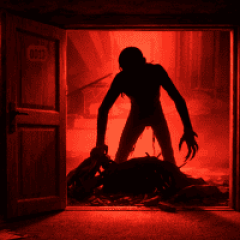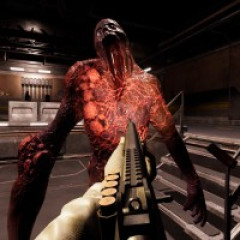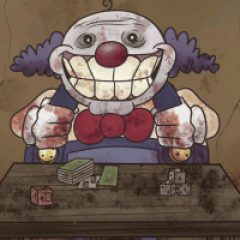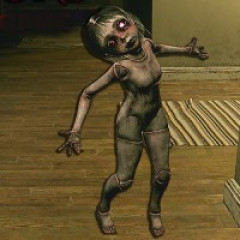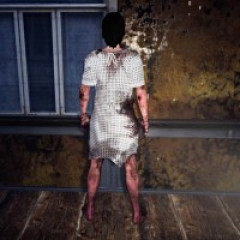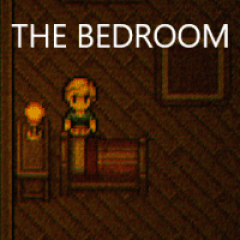
Agoraphobia is a room escape puzzle game that offers an intriguing challenge. Inspect hidden clues, solve room puzzles, and combine useful items.
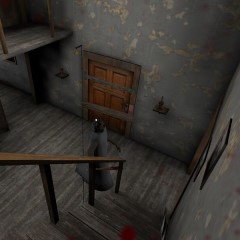
This game combines psychological horror, exploration, and problem-solving. You take control of a person trapped inside an apartment that has been transformed by a strange force. At first, the setting seems ordinary. You have familiar rooms and everyday objects around you. However, the longer you investigate, the clearer it becomes that something is fundamentally wrong. The apartment is no longer simply a place to live. It has become a collection of interconnected puzzles that you must solve to escape. The game uses a simple mouse-controlled interface. You can inspect objects, collect items, combine inventory objects, and examine clues more closely. Because the controls are uncomplicated, your attention remains focused on the environment and the logic behind each puzzle. The challenge comes from understanding what you see rather than mastering complicated controls. Besides, I introduce The Coffin of Andy and Leyley and LoveMoney, which are also amazing point-and-click games on our website.
You need to search the apartment carefully and collect objects that may help you progress. Do not assume that an item is useful simply because you can pick it up. Its purpose may only become apparent after you discover another object or clue. Likewise, an apparently ordinary object may contain information that helps you understand a later puzzle. When you find something unfamiliar, inspect it carefully. Pay attention to descriptions, details, and anything that could connect it to another part of the environment.
Some puzzles require you to combine items rather than using them individually. To do this, select one inventory item and use it on another. The resulting combination may provide the tool or object needed to overcome an obstacle. This mechanic adds a layer of experimentation to the escape-room structure. If you have collected several objects but cannot determine what they are for, consider whether two of them belong together. However, random combinations are not always the best approach. Look for clues in the environment that suggest why two items might interact.
Right-clicking an inventory item allows you to inspect it. This is an important feature because information about an object may be just as valuable as the object itself. When solving a difficult puzzle, go back through your inventory and examine anything you have not fully understood. A small detail can provide the connection you were missing. The game rewards curiosity, so taking time to investigate objects thoroughly can prevent you from overlooking useful clues.
How to control: Left click = Choose.
Memory can become surprisingly important in an escape-room game. When you discover a symbol, unusual object, number, or environmental detail, remember where you found it. A clue may not make sense immediately but could become useful later. Because puzzles can be layered, solving one part of the apartment may suddenly explain something you saw much earlier.
The game's horror works partly because it takes everyday surroundings and makes them unfamiliar. That means ordinary objects deserve attention. Something that looks like simple decoration may provide a clue. A familiar room may contain an unusual detail. An item that seems useless may become important when combined with another object. Examine the environment carefully rather than focusing only on obviously suspicious objects.