The Bedroom is an awesome horror game with 23 endings. Survive a terrifying three-day nightmare, investigate strange clues, and choose your path.
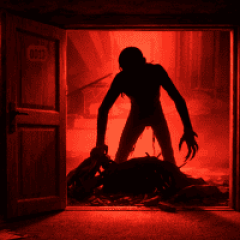
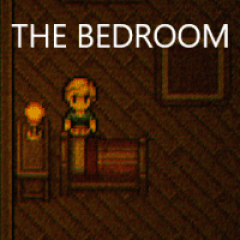
The story of the game begins with a young girl waking up in her bedroom. The room is poorly illuminated, with a small lamp near the headboard providing only enough light to reveal parts of the space. Beyond that weak glow are dark corners that seem increasingly threatening. Then comes the knock. Something is outside the bedroom door. It sounds like the girl's mother or father. It speaks and behaves like them. Yet she knows that whatever is waiting outside isn't really her family. That simple contradiction establishes the central mystery of The Bedroom gameplay. You are not simply trying to find an object or solve a conventional puzzle. You are trying to understand whether the voice outside can be trusted, what is happening to the house, and why the girl's reality appears to be changing.
The mechanics of The Bedroom game are deliberately uncomplicated. Most of your time is spent interacting with the environment and examining the bedroom door. There isn't an elaborate inventory system or complicated combat mechanic demanding constant attention. This simplicity serves the horror. Because you have relatively few actions available, small interactions become more significant.
When you begin a new day, take time to examine your surroundings. The bedroom may appear unchanged at first, but subtle details can become important. Pay attention to anything that seems different from an earlier visit. A change in the environment can provide context for the story or hint at a possible direction. Don't assume that an object is irrelevant simply because it doesn't immediately produce a dramatic response.
The bedroom door is at the heart of the experience. Your interaction with it can influence what happens next, and the game uses the door to create a constant feeling of uncertainty. Before making a decision, consider what you've already learned. Have the sounds outside changed? Has something unusual happened in the room? Did the previous day provide a clue about what might be waiting outside? These details can help you make more informed choices during subsequent attempts.
How to control
Like Ann, this game also features multiple endings. The 23 endings in The Bedroom, ranging from A to W, are one of the game's biggest attractions. They turn a short horror experience into something closer to a mystery that you gradually reconstruct. Multiple endings aren't simply a way to extend playtime. Each route can provide additional context.
When you discover another ending, think about what changed:
Approaching the endings this way makes the game feel more like an investigation.
The soundtrack relies heavily on ambient noises and immersive sound design. This is important because silence can be more effective than constant music in a horror game. A quiet room makes every knock, movement, and unfamiliar noise stand out. When something happens outside the bedroom, you have no visual confirmation of what caused it. You have to rely on what you hear. That uncertainty makes the door much more threatening.
Like Nextdoor, this psychological horror game also uses moody visual effects rather than relying on elaborate graphical detail. The limited environment works in its favor. Because you're spending much of the game in one room, even subtle changes can become noticeable. A familiar object appearing slightly different can be more disturbing than an obviously frightening monster. The visual presentation also complements the game's experimental roots. It doesn't try to overwhelm you with spectacle. Instead, it creates an oppressive atmosphere around a small number of locations and interactions.