Unlikely is a great horror game with simple mechanics. You must survive five increasingly difficult rounds by earning at least 10 points in each round.
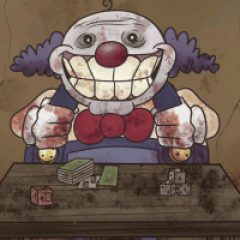
You wake up imprisoned inside a small room after being kidnapped, with no escape route except winning the clown's game. Everything happens inside a confined environment. A table separates you from a frightening clown, while three dice and a stack of cards become the tools that decide your fate. This game builds suspense through uncertainty. Every roll can improve your chances or bring you closer to death. Luck is the core mechanic in this game. The game estimates that you only have about a 66.6% chance of winning, making every decision feel risky. Even when you understand the rules perfectly, there is always uncertainty in the dice. This creates a different kind of horror. You are waiting for the result of each roll while knowing the clown is watching. The combination of randomness and survival creates constant psychological pressure.
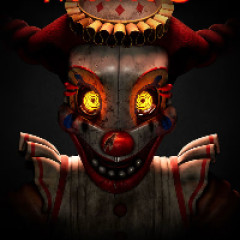
The story begins with you as the victim of a kidnapping. You wake up trapped inside a small, dark room where a clown forces you to participate in a deadly lucky game. The walls already contain bloodstains, suggesting that other victims entered this room before you and did not survive. There is no explanation about how you arrived there. The immediate objective is simply to survive. The clown never feels like an ordinary game host. He sits silently across the table while you play. Every failed attempt increases the tension because you know he controls the outcome once you lose. His expression changes dramatically when you fail to reach the required score. His glowing red eyes become the warning that your game has ended. This makes the clown more than a visual horror element. He represents the consequence of every unlucky roll.
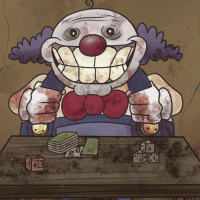
Clown in Unlikely
Although this game is a horror game, its gameplay revolves around cards and dice rather than exploration or combat. Understanding the rules is essential because every point matters.
Every turn begins by drawing a card from the pile on the table. Each card displays three numbers. Those numbers become your target for the dice roll. For example, if the card displays three specific numbers, your goal is to roll the three dice so they match those targets. The card determines your objective for that turn, so you need to pay close attention before rolling.
After drawing the card, roll the three dice. Every die that matches one of the numbers shown on the card earns one point. Possible outcomes include:
If none of the dice match, you can choose to reroll if rerolls remain available. This simple scoring system becomes increasingly tense because every missed opportunity brings you closer to failure.
How to control: Click the left mouse button to roll dice.
Scoring determines whether you survive the round. The objective is always to reach at least 10 points before running out of opportunities.
Each successful die contributes directly toward your survival score. Because you can earn up to three points from a single card, strong rolls can significantly improve your progress. However, poor rolls can leave you depending on rerolls or the big die. Instead of celebrating every successful card equally, pay attention to your remaining cards and rerolls. A small lead early in the round can disappear quickly if luck changes.
Rerolls are limited, making them valuable resources. If you roll zero matching dice, using a reroll is usually your best opportunity to recover. However, you should avoid wasting rerolls after already earning points from a card unless absolutely necessary. Think about the remaining cards before deciding whether another attempt is worth the risk.
The large die introduces another layer of randomness into Unlikely. You can roll it for an additional effect instead of relying only on the regular dice. The big die has two important outcomes:
An extra card can create another opportunity to earn points, especially when you are running out of cards. On the other hand, losing a point can make reaching the target considerably harder. If you are comfortably approaching ten points, risking a point may not be worthwhile. If you are running out of cards and still need additional scoring opportunities, the extra card may justify the gamble. The big die reflects the overall theme of Unlikely: survival often depends on choosing between two uncertain outcomes.
Unlikely contains five rounds, and each round becomes more demanding than the previous one. The game's progression gradually reduces your resources while increasing the pressure.
The first round is the most forgiving. You begin with:
This gives you multiple opportunities to reach ten points. It is also the best round for understanding the rhythm of the game if you are playing for the first time.
After Round One, the rules become stricter. You receive:
The reduced number of cards means every roll becomes more important. If you need extra opportunities, the only solution is risking the big die. This gradual reduction in resources keeps the tension increasing throughout the game.
The gameplay would feel very different without its environment. This game uses its setting to maintain fear even when nothing is actively attacking you. The room is intentionally cramped and unsettling. Blood stains on the walls immediately suggest previous victims. The table becomes the center of the experience, leaving very little distance between you and the clown. This confined setting makes every roll feel personal. There is nowhere to hide, nowhere to run, and no distraction from the clown watching you.
Unlikely has two endings, both determined entirely by your success during the five rounds.
Failing to reach ten points during any round immediately triggers the first ending. The clown laughs. His eyes turn red. Moments later, he assassinates you. This ending reinforces the game's central rule: one failed round ends everything. There is no second chance after losing.
The second ending requires you to survive all five rounds. If you earn enough points in every round, the clown repeats the word Unlikely. Instead of killing you, the clown dies. You survive and safely leave the dark room. This ending transforms the game's title into its final message, suggesting that surviving something so dependent on luck was almost impossible.