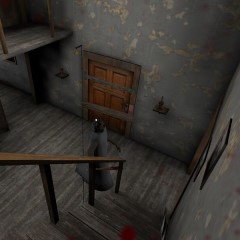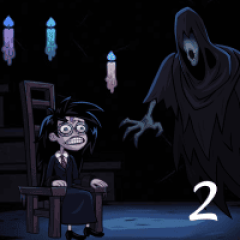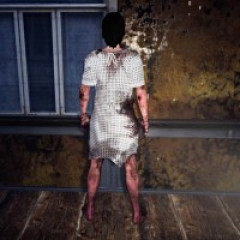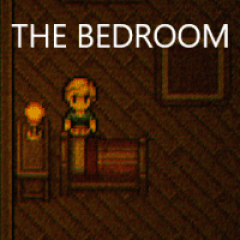
Mark's Room is an old-school horror game that tests your puzzle-solving skills. Collect items, unlock containers, find passwords, and uncover clues.
Like Haunted School, this game also features a design that favors observation and independent problem-solving, with only minimal hints available. If you are accustomed to games that clearly indicate what to do next, Mark's Room may require a different mindset. The game expects you to investigate your surroundings and decide which objects might be important. The rooms are not simply places you pass through. They contain the items and clues you need to make progress, while also contributing to the story surrounding Mark's past. Besides, you can take a look at Closing Doors, which is another exciting horror game on our website.
The core of Mark's Room revolves around collecting and manipulating objects, unlocking containers, finding passwords, and solving puzzles. Each action can contribute to your eventual escape. You need to think about both individual items and their possible relationships with other objects.
Collecting items is one of the first things you should pay attention to when exploring a room. An object may have an obvious purpose, but it may also become useful only after you discover another item. The game encourages you to build an understanding of your inventory rather than immediately knowing what every object does. As you explore, consider which objects could be connected. If something seems unusable on its own, it may become meaningful after you find another item. The important part is to remain curious. In a hardcore room escape game, overlooking one object can leave you searching for the next step without realizing that the solution was already nearby.
Mark's Room also lets you combine or dismantle items. This adds another layer to its item-based puzzles. An item you collect is not necessarily a finished tool. You may need to alter it before it becomes useful, or combine it with another object to create something that helps you progress. This means your inventory should not be treated as a collection of isolated objects. When you become stuck, reconsider what you already have. Instead of assuming that you need to discover an entirely new item, think about whether an existing object can be combined with something else or dismantled. This kind of reasoning is particularly important in Mark's Room puzzles, where minimal hints encourage you to make connections independently.
When you find a password-related clue, avoid assuming that the answer will always be presented directly. A clue may require you to connect information from different parts of the room. This is where careful exploration becomes valuable. If you have found a strange object, note it mentally. If you discover a suspicious piece of information later, consider whether the two discoveries might be related. You should also remember that the game's limited hints are intentional. If the solution is not immediately obvious, taking more time to examine what you have already discovered may be more productive than searching randomly.
Getting stuck is a normal part of a hardcore escape game. When you reach a point where you cannot see a solution, go back through your inventory and reconsider the objects you have collected. You may have overlooked a possible combination, missed a way to dismantle an item, or failed to recognize how something relates to a container or password. Retracing your steps can also help you notice environmental details that did not seem important earlier. The key is to approach the puzzle from another angle rather than repeatedly attempting the same action.
Because Mark's Room offers minimal hints, having a methodical approach can make your experience much smoother.
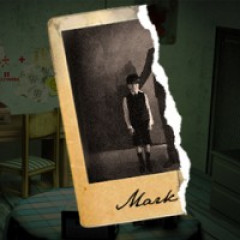
In conclusion, Mark's Room is built for you if you want an old-school hardcore room escape experience where observation and independent thinking matter. Its intuitive puzzles, minimal hints, item manipulation, locked containers, passwords, and mysterious rooms create a demanding challenge without relying on constant guidance. The childhood-home setting gives the game a distinctive narrative foundation. Furniture, toys, and familiar details create a sense of recognition, while the unexplained feeling that something is wrong encourages you to investigate further. As you progress, you collect items, combine or dismantle them, unlock containers, find passwords, and solve puzzles to obtain the key and escape. But reaching the exit of one room only leads to another, more challenging room. Beyond the escape itself, you can search for clues that reveal more about your past and gradually piece together what happened. Completing all the rooms is difficult, and collecting all the clues adds an even greater challenge for anyone who wants to understand the full mystery. Developed by Ginger and Snow (G.S.) Studio, Mark's Room stays focused on the fundamentals of the escape-room genre: look closely, think carefully, experiment with what you find, and do not expect the game to hand you every answer. If you enjoy solving problems independently and want a room escape game that gives you a genuine challenge, Mark's Room is worth exploring.