Iron Lung is a terrifying deep-sea game where players are trapped inside a tiny submarine, navigating unknown waters with no clear visibility or safety.
Iron Lung is a first-person survival horror game that places players inside a tiny, outdated submarine trapped in a strange and hostile ocean. The environment is not a normal sea but a surreal, blood-colored body of water filled with unknown dangers and unsettling silence. The player’s mission is to navigate this environment using minimal equipment while documenting what lies beneath the surface.
The core concept of Iron Lung revolves around extreme isolation. Players cannot see outside the submarine window, meaning they must rely entirely on instruments, maps, and limited sensor readings to understand their surroundings. This creates a constant feeling of uncertainty, as every movement into the unknown carries potential risk.
Unlike traditional horror games that rely on jump scares or visible enemies, Iron Lung builds fear through imagination. The lack of visual information forces players to picture what might be outside, making the experience far more psychological. The atmosphere is tight, suffocating, and deeply unsettling, emphasizing how fragile human control becomes in an unfamiliar deep-sea environment.
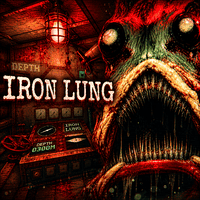 Iron Lung is a claustrophobic horror game
Although Iron Lung focuses heavily on a single narrative experience, its structure can be understood through different gameplay phases that feel like distinct modes.
During exploration, players pilot the submarine through uncharted waters. The goal is to reach specific coordinates and take photographs of key locations. Navigation is extremely limited, and players must interpret basic instruments to move safely.
As players venture deeper, the tension increases. Strange signals, distorted readings, and unexpected hazards make survival more difficult. This phase focuses on maintaining control of the submarine while avoiding fatal mistakes.
In this phase, players must collect evidence and complete mission objectives. Every photo or data point adds to the understanding of the ocean, but also increases exposure to unknown threats.
Iron Lung is a claustrophobic survival horror game where players control a small submarine trapped in a mysterious red ocean. The main objective is simple on paper but extremely difficult in execution: navigate to specific coordinates, take photos of unusual locations, and return safely without losing control of the vessel.
There is no direct combat in Iron Lung. Instead, the entire gameplay is built around navigation, observation, and precision. Players must rely on a limited set of instruments inside the submarine because there is no external visibility. Every movement is guided by maps, coordinates, and basic onboard systems.
The submarine slowly moves through an unknown environment where danger cannot be seen directly. This design forces players to trust data rather than instinct. Even small navigation mistakes can lead to complete failure, making every decision feel heavy and important.
What makes Iron Lung stand out is its use of isolation as the main source of fear. The player is completely trapped inside a metal shell, cut off from direct vision of the outside world. This lack of information turns every journey into a psychological challenge rather than a physical one.
Instead of showing threats directly, the game forces players to imagine what might be outside the submarine. This unseen danger creates constant tension, making even simple navigation feel stressful. The result is a horror experience that relies on uncertainty, silence, and controlled helplessness rather than action or combat.
Iron Lung delivers a rare kind of horror where fear comes from limitation, not visibility. Its navigation-based gameplay and extreme isolation create a constant sense of pressure that stays with players throughout the experience. For those who enjoy slow-burning psychological horror, there are many more intense experiences waiting in FNAF games, where survival often depends on attention, timing, and nerve under pressure.